Overview of Common Cold Chain Equipment Explained
Cold chain equipment refers to specialized tools, vehicles, storage units, and monitoring systems that maintain stable temperatures for sensitive products during storage, handling, and transport. These technologies protect goods that must remain chilled, frozen, or ultra-cold, such as vaccines, biologics, pharmaceuticals, frozen foods, and laboratory samples.
Because cold chain logistics is essential across healthcare, food safety, pharmaceuticals, and biomedical research, understanding each equipment type helps many of you make informed decisions when selecting a service provider.
As a logistics provider specializing in temperature-controlled delivery, we use professional-grade equipment designed for precision, compliance, and reliability. Below, we explain the most common cold chain equipment used globally and how each one supports safe transport.
Core Categories of Cold Chain Equipment
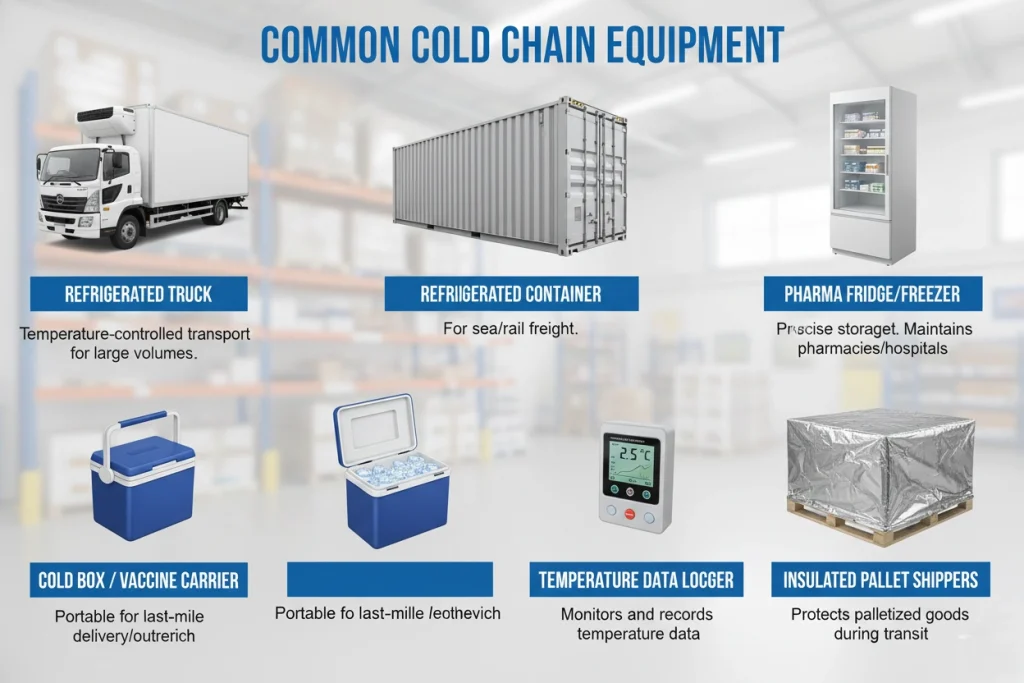
Cold chain operations rely on several equipment types, usually grouped into three functional categories:
- Cold chain storage equipment
- Cold chain transportation equipment
- Cold chain monitoring equipment
Each category plays a critical role in maintaining integrity from end to end.
Cold Chain Storage Equipment
Cold chain storage begins at warehouses, manufacturing plants, hospitals, and distribution hubs. Below are the most common storage technologies.
Pharmaceutical Refrigerators (+2°C to +8°C)
Used for vaccines, insulin, biologics, laboratory reagents, and clinical samples.
Features include:
- Digital temperature calibration
- Internal airflow circulation
- WHO-compliant design
- Backup power systems
Medical Freezers (–20°C to –40°C)
Used for frozen reagents, plasma, and certain types of biologics.
Key components:
- Forced-air cooling
- Anti-frost systems
- High-density insulation
Ultra-Low Temperature (ULT) Freezers (–80°C)
Essential for storing:
- DNA/RNA samples
- mRNA vaccines
- Cell cultures
These units include vacuum-insulated panels and redundant compressors for maximum stability.
Cold Rooms & Walk-In Freezers
Large-scale temperature-controlled rooms used in pharmaceutical and food distribution centers.
They maintain stable environments for bulk storage and support:
- Pallet storage
- High-volume inventory
- Rapid throughput
Cold Chain Transportation Equipment
Cold chain logistics relies on specialized vehicles and transport containers to prevent temperature excursions during movement.
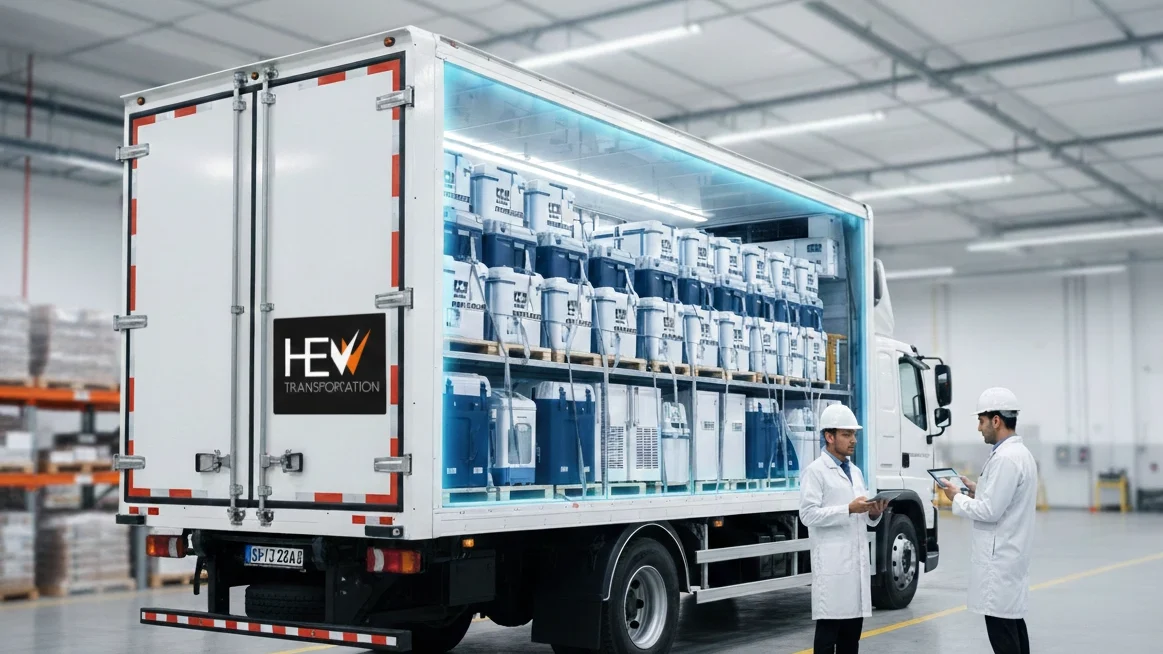
Refrigerated Vans & Trucks
These are the main vehicles used by our team for temperature-controlled delivery. They include:
- Chiller vans (+2°C to +8°C)
- Freezer vans (–18°C and below)
- Multi-zone vans (different temps in one vehicle)
Refrigerated vehicles use:
- Compressor-based cooling
- Insulated cargo panels
- Real-time temperature monitoring
- Power backup units
Insulated Thermal Boxes
Used for last-mile delivery or smaller medical shipments. They protect products using:
- High-density insulation
- Gel packs
- Phase-change materials (PCM)
- Dry ice (for frozen goods)
Dry Ice Shipping Containers
Used for ultra-cold items. Benefits include:
- Holds –78.5°C
- Long cooling duration
- Suitable for biologics and genomic materials
Vaccine Carriers & Medical Coolers
Portable containers used for hospital, clinic, and home-care transport.
Most include:
- Tamper-proof locks
- Data logging ports
- WHO PQS certification
Cold Chain Monitoring Equipment
Temperature monitoring is the backbone of cold chain compliance. Below is the equipment used to track performance continuously.
Digital Data Loggers (DDL)
The most common tool used across the industry. They provide:
- Continuous temperature recording
- WHO-compliant time-stamped reports
- Alarms for excursions
IoT Temperature Sensors
Provide real-time alerts via:
- Wi-Fi
- GSM
- GPS trackers
They are essential for pharmaceutical deliveries.
GPS Fleet Monitoring Systems
Installed in refrigerated vehicles to monitor:
- Real-time route
- Temperature
- Door-open alerts
- Driver behavior
Remote Monitoring Dashboards
Used by logistics teams to observe:
- Vehicle temperature
- Cold room climate
- Humidity
- Power status
This ensures total transparency from origin to destination.
Table: Common Cold Chain Equipment and Their Uses
| Equipment Type | Temperature Range | Common Use | Industry |
|---|---|---|---|
| Pharmaceutical Fridge | +2°C to +8°C | Vaccines, insulin, biologics | Healthcare |
| Medical Freezer | –20°C to –40°C | Plasma, frozen reagents | Healthcare |
| ULT Freezer | –80°C | DNA, RNA, mRNA vaccines | Biomedical |
| Refrigerated Van | +2°C to –20°C | Food, pharmaceuticals | Logistics |
| Insulated Box | Variable | Last-mile delivery | Healthcare & Retail |
| Dry Ice Container | –78.5°C | Genetic materials | Scientific |
| Data Logger | N/A | Monitoring temperatures | All industries |
How These Equipment Work Together in a Real Cold Chain
Below is a simplified workflow illustrating how cold chain equipment interacts in a healthcare setting:
Step-by-Step Medical Cold Chain Flow
- Manufacturing stage
- Vaccines stored in ULT freezers
- Packed in insulated containers
- Vaccines stored in ULT freezers
- Warehouse stage
- Transferred to pharmaceutical fridges
- Temperature monitored with digital data loggers
- Transferred to pharmaceutical fridges
- Transport stage
- Loaded into refrigerated vans
- GPS and temperature tracked in real-time
- Loaded into refrigerated vans
- Last-mile delivery
- Insulated carriers used for final drop-off
- Delivery personnel verify logs
- Insulated carriers used for final drop-off
- Clinical use
- Stored in medical refrigerators
- Used immediately for safe patient care
- Stored in medical refrigerators
To see how healthcare applies these tools, visit this internal guide: how healthcare uses cold chain logistics.
Conclusion: Why Reliable Cold Chain Equipment Matters for Every Supply Chain
Cold chain equipment ensures that sensitive goods remain safe, stable, and effective from production to delivery. Many of you rely on these systems daily, whether for vaccines, biologics, temperature-sensitive foods, or precise laboratory samples.
As a professional cold chain logistics provider, we deliver:
- Reliable refrigerated vehicles
- Validated insulated containers
- Real-time monitoring
- Pharmaceutical-grade handling processes
- Compliance with healthcare and food safety standards
For organizations that need fast, precise, and safe temperature-controlled delivery, explore our services and expertise at HEW Transportation.
FAQs (Frequently Asked Questions)
What is the most essential cold chain equipment?
Refrigerated vehicles and digital data loggers are considered the backbone of any cold chain system.
How long can insulated boxes maintain temperature?
Depending on the PCM or gel packs, insulated boxes can maintain temperatures from 8 to 72 hours.
Is dry ice safe for medical shipments?
Yes, but only in well-ventilated containers because dry ice releases CO₂ gas.
Do refrigerated vans require backup power?
Yes. Professional fleets, including ours, use standby power, dual compressors, or battery backups.
Which industries rely on cold chain equipment?
Healthcare, pharmaceuticals, biotech, food distribution, hospitality, chemical science, and clinical research.