What Is Cold Chain Logistics for Temperature Sensitive Products?
Cold chain logistics for temperature sensitive products refers to a controlled supply chain system designed to maintain specific temperature ranges during storage, handling, and transportation. The goal is simple but critical: ensure products arrive in the same condition they left, without spoilage, degradation, or loss of effectiveness.
These products include pharmaceuticals, vaccines, biologics, medical devices, fresh and frozen food, specialty chemicals, and laboratory materials. What they share is vulnerability. Even short exposure outside approved temperature ranges can make them unsafe, ineffective, or unsellable.
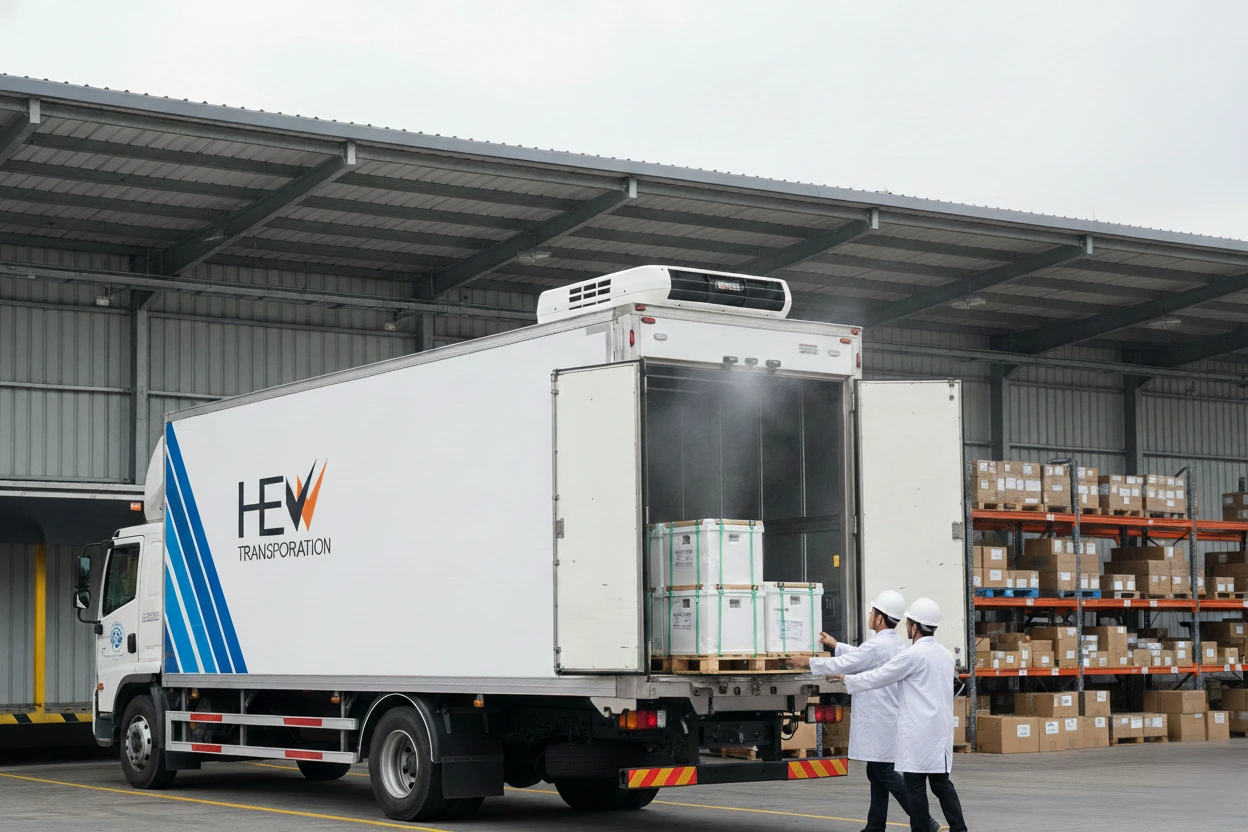
In practice, cold chain logistics for temperature sensitive products is not just about refrigerated trucks. It is an integrated process involving planning, equipment, trained personnel, monitoring, documentation, and compliance. When done right, it protects product integrity and business reputation. When done poorly, the consequences are immediate and costly.
Why Cold Chain Logistics Matters More Than Ever
As global supply chains become faster and more decentralised, temperature control has become harder, not easier.
Businesses today face:
- Shorter delivery windows.
- Higher regulatory scrutiny.
- More temperature-sensitive products in circulation.
- Greater customer and patient expectations.
In industries like healthcare and food distribution, cold chain logistics for temperature sensitive products directly affects safety outcomes. A vaccine exposed to heat or a chilled food product left unrefrigerated is not a minor issue. It is a failure point with legal, financial, and ethical implications.
Products That Depend on Cold Chain Logistics
Pharmaceutical and Healthcare Products
Pharmaceutical cold chain logistics supports:
- Vaccines and biologics.
- Insulin and injectables.
- Clinical trial samples.
- Blood, plasma, and lab materials.
Temperature deviations can reduce potency or render products unusable. This is why cold chain operations often align closely with pharmaceutical delivery compliance in Singapore, where documentation and traceability are mandatory.
Food and Beverage Products
Cold chain logistics for temperature sensitive products in food includes:
- Fresh produce.
- Dairy and meat.
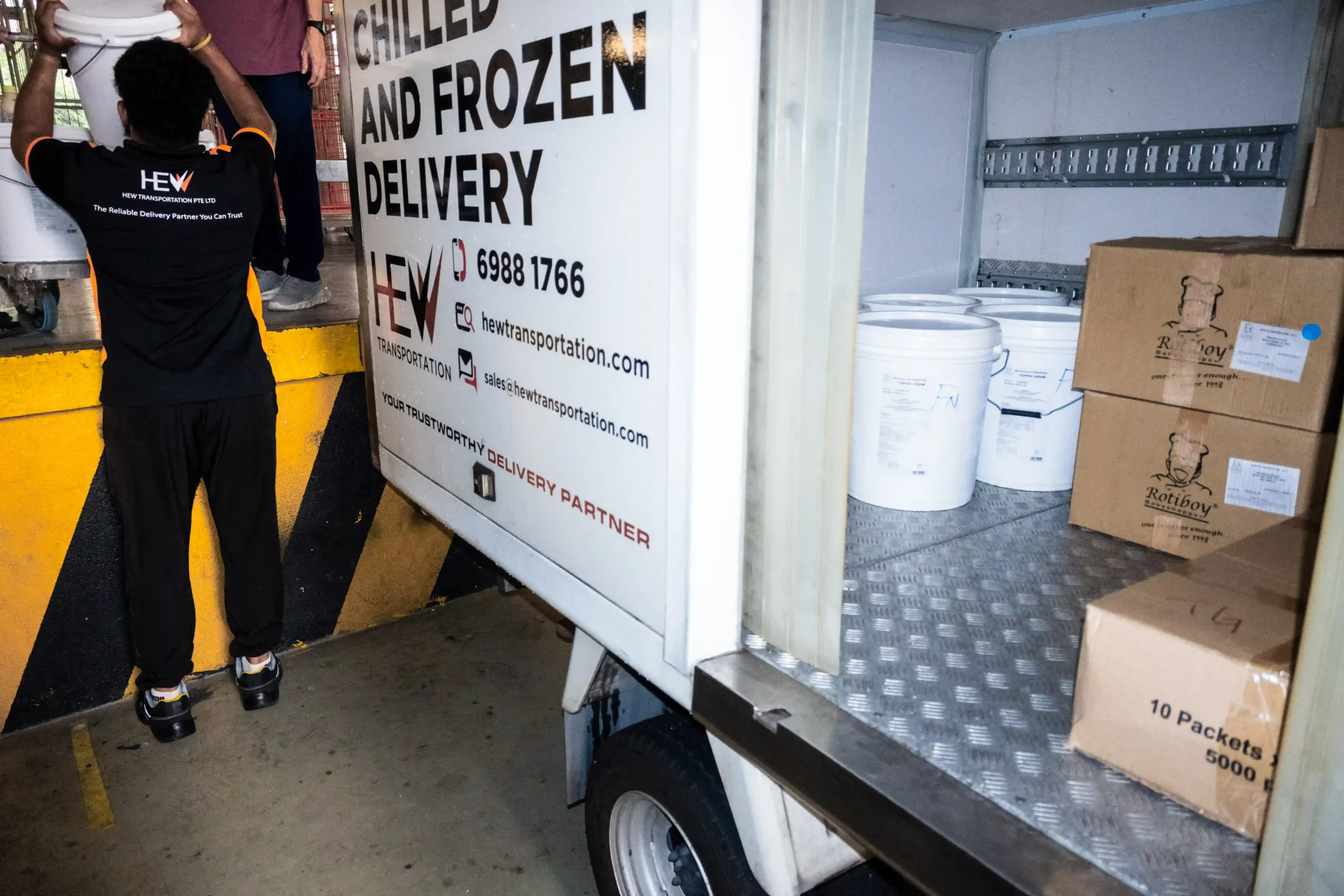
- Frozen and chilled meals.
- Specialty ingredients.
Here, temperature control prevents spoilage, foodborne illness, and waste.
Industrial and Scientific Materials
Certain chemicals, reagents, and materials also degrade when exposed to heat or humidity. Cold chain logistics ensures consistency and reliability in downstream processes.
How Cold Chain Logistics for Temperature Sensitive Products Works
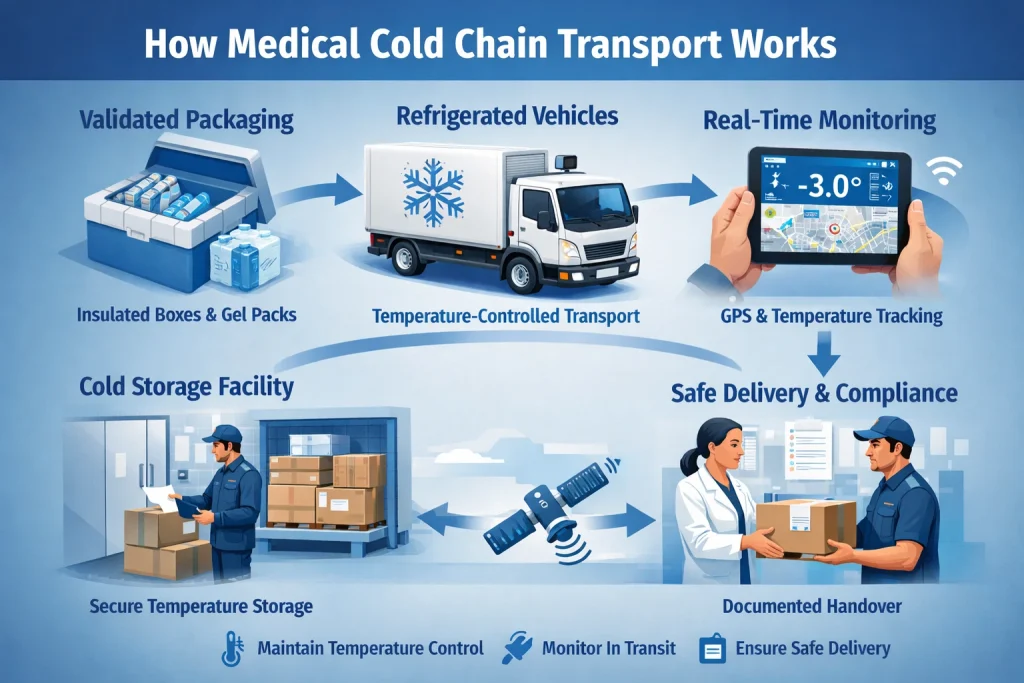
Cold chain logistics follows a continuous control model. Once temperature control breaks, the chain breaks.
Step 1: Temperature Requirement Definition
Every product has a validated temperature range, such as:
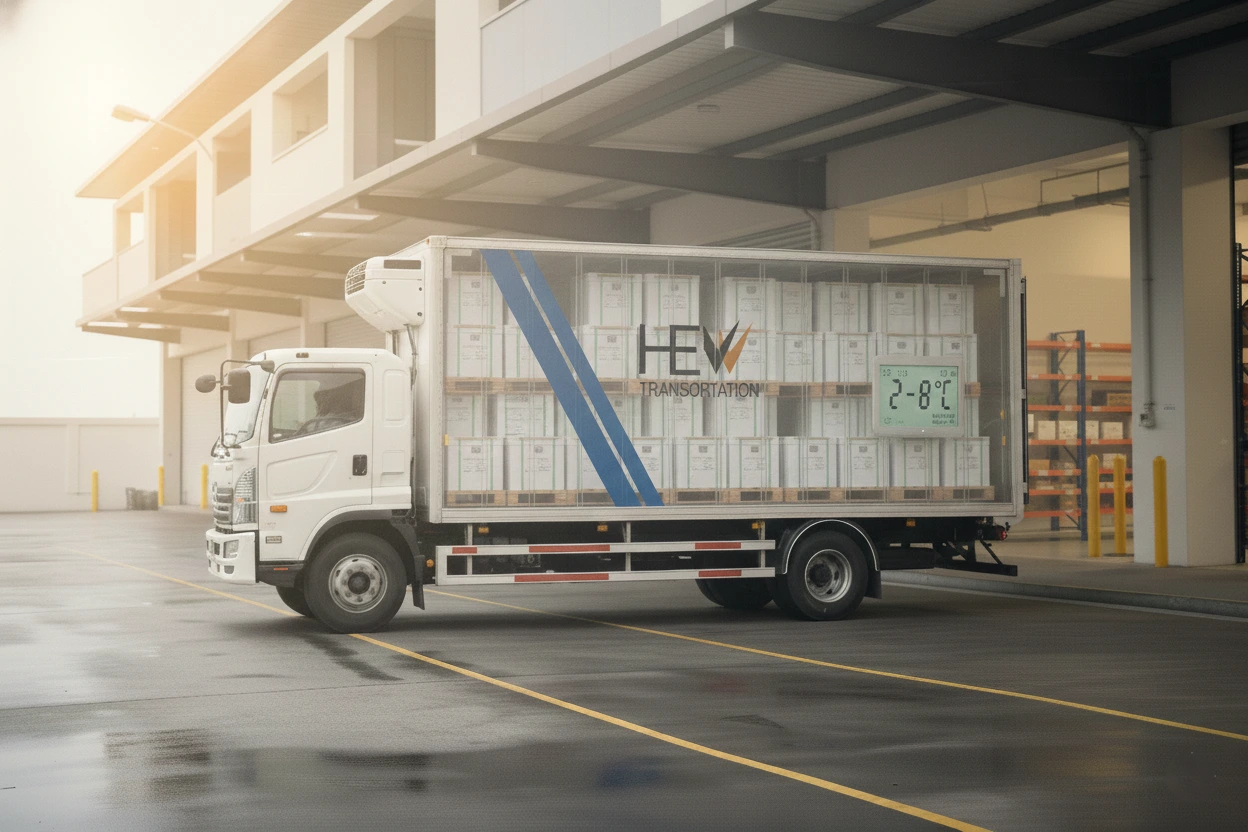
- 2°C to 8°C (chilled).
- 15°C to 25°C (controlled ambient).
- Below -18°C (frozen).
This range defines every downstream decision.
Step 2: Packaging and Insulation Selection
Depending on duration and risk level, operators may use:
- Insulated containers.
- Gel packs or dry ice.
- Active temperature-controlled boxes.
Packaging is not generic. It is selected based on exposure risk, transit time, and contingency needs.
Step 3: Temperature-Controlled Transport
This includes:
- Refrigerated vans or lorries.
- Pre-cooled cargo spaces.
- Validated vehicle performance.
For regulated goods, this stage often links directly to pharmaceutical delivery compliance in Singapore, where transport is audited as part of GDP requirements.
Step 4: Monitoring and Documentation
Cold chain logistics for temperature sensitive products relies heavily on data:
- Data loggers.
- Real-time temperature sensors.
- Trip-based temperature reports.
If temperature cannot be proven, it is assumed to have failed.
Common Temperature Ranges in Cold Chain Logistics
| Category | Temperature Range | Typical Products |
|---|---|---|
| Frozen | Below -18°C | Frozen food, plasma |
| Chilled | 2°C – 8°C | Vaccines, dairy |
| Controlled Ambient | 15°C – 25°C | Medicines, supplements |
| Ultra-Cold | Below -60°C | Advanced biologics |
This table is central to planning cold chain logistics for temperature sensitive products.
Where Cold Chain Failures Usually Happen
From operational reviews, failures rarely happen during driving. They happen at transition points.
Common risk zones include:.
- Loading and unloading bays.
- Waiting time at delivery sites.
- Traffic delays without backup cooling.
- Poor communication during handovers.
In one internal logistics review, over 65% of temperature excursions occurred during handling, not transport. This highlights that cold chain logistics is a people-and-process challenge as much as a technical one.
Regulatory and Compliance Expectations
Cold chain logistics for temperature sensitive products operates under strict oversight, especially in healthcare.
Key expectations include:
- Documented SOPs.
- Trained personnel.
- Temperature excursion reporting.
- Corrective and preventive actions.
Globally, organisations such as the World Health Organization (WHO) define cold chain principles as a critical requirement to protect vaccines, biologics, and other high-risk medical products throughout storage and transportation. These global standards reinforce why cold chain logistics for temperature sensitive products must be treated as a compliance-driven discipline, not a logistics afterthought.
In Singapore, healthcare operators must align delivery practices with pharmaceutical delivery compliance in Singapore, ensuring that transport conditions meet HSA and GDP standards.
Cost of Poor Cold Chain Logistics
Businesses often underestimate the true cost of failure.
Consequences include:
- Product write-offs.
- Regulatory penalties.
- Product recalls.
- Loss of customer trust.
- Operational disruption.
A single temperature breach can wipe out the profit of dozens of successful deliveries.
Case Insight: Small Controls, Big Impact
In a multi-route cold chain operation review:
- Pre-cooling vehicles reduced temperature deviation by 28%.
- Driver training reduced handling-related excursions by 35%.
- Redundant temperature monitoring reduced dispute resolution time by 50%.
No new vehicles were added. Performance improved through better control of cold chain logistics for temperature sensitive products.
How HEW Transportation Manages Cold Chain Logistics
At HEW Transportation, cold chain logistics for temperature sensitive products is treated as a system, not a service add-on.
Our approach focuses on:
- Temperature-appropriate vehicles.
- SOP-driven handling.
- Trained delivery teams.
- Clear documentation and accountability.
- Compliance-aligned operations.
We work with healthcare, food, and regulated industries that cannot afford temperature uncertainty.
Actionable Checklist for Businesses
Use this checklist to strengthen your cold chain operations:
- Define temperature ranges clearly.
- Validate packaging and vehicles.
- Monitor temperature continuously.
- Train drivers on handling and escalation.
- Review temperature data regularly.
Pro Tips from the Field
- Short routes still need full cold chain controls.
- Handling time is riskier than driving time.
- If it is not recorded, it did not happen.
Conclusion: Cold Chain Logistics Is a Business Discipline, Not Just Transport
Cold chain logistics for temperature sensitive products is about control, accountability, and trust. It protects patients, customers, and brands by ensuring products arrive exactly as intended.
At HEW Transportation, we support businesses that rely on cold chain logistics through structured processes, compliance-aligned delivery, and real-world operational experience. If your products depend on temperature integrity, working with a partner who understands cold chain logistics at ground level is not optional. It is essential.
FAQs (Frequently Asked Questions)
What products require cold chain logistics?
Any product that degrades outside specific temperature ranges, including pharmaceuticals, food, biologics, and some chemicals.
Is refrigerated transport enough for cold chain logistics?
No. Cold chain logistics also requires packaging, monitoring, SOPs, and trained personnel.
What happens if a temperature excursion occurs?
Products may need quarantine, investigation, and possible disposal, depending on severity and regulations.
How long can temperature sensitive products stay in transit?
This depends on packaging, cooling method, and temperature range. Longer transit requires stronger controls.
How can businesses reduce cold chain risks?
By planning routes, reducing handling time, training staff, and using reliable logistics partners.