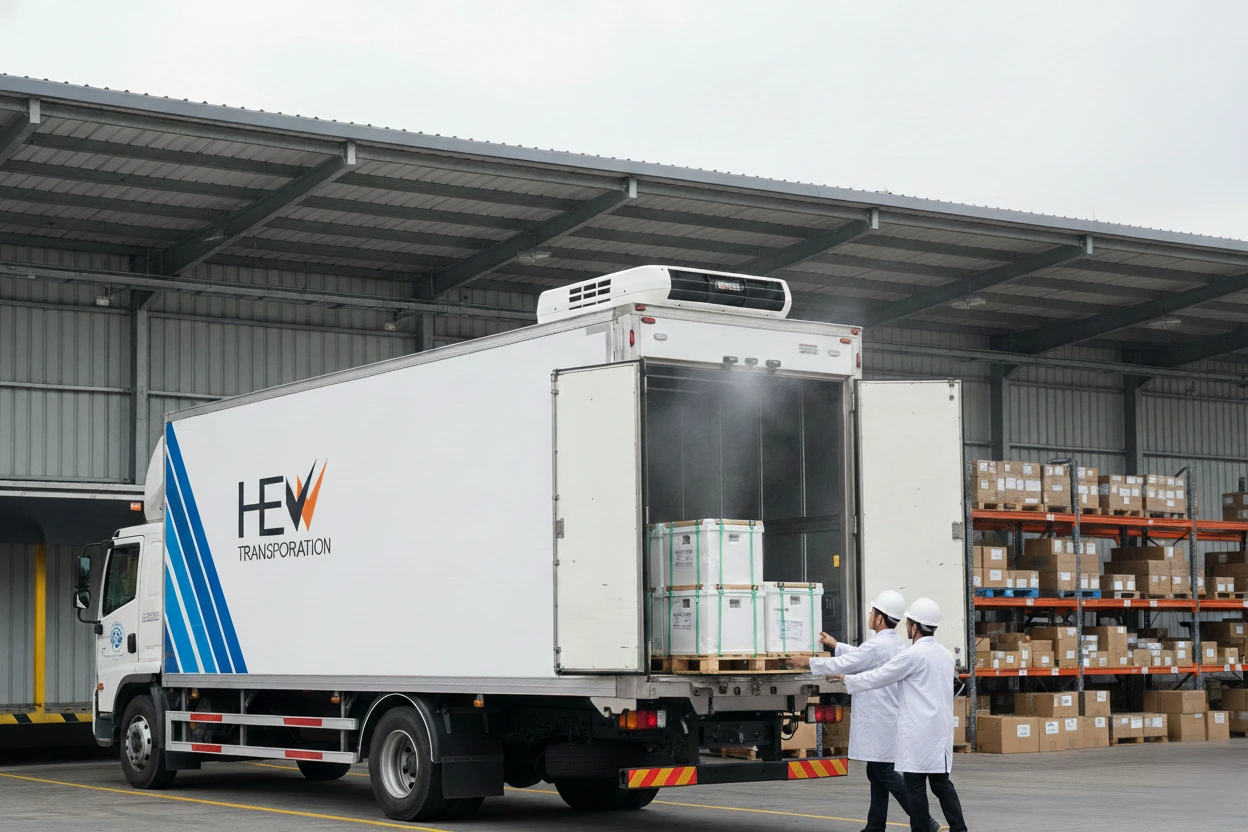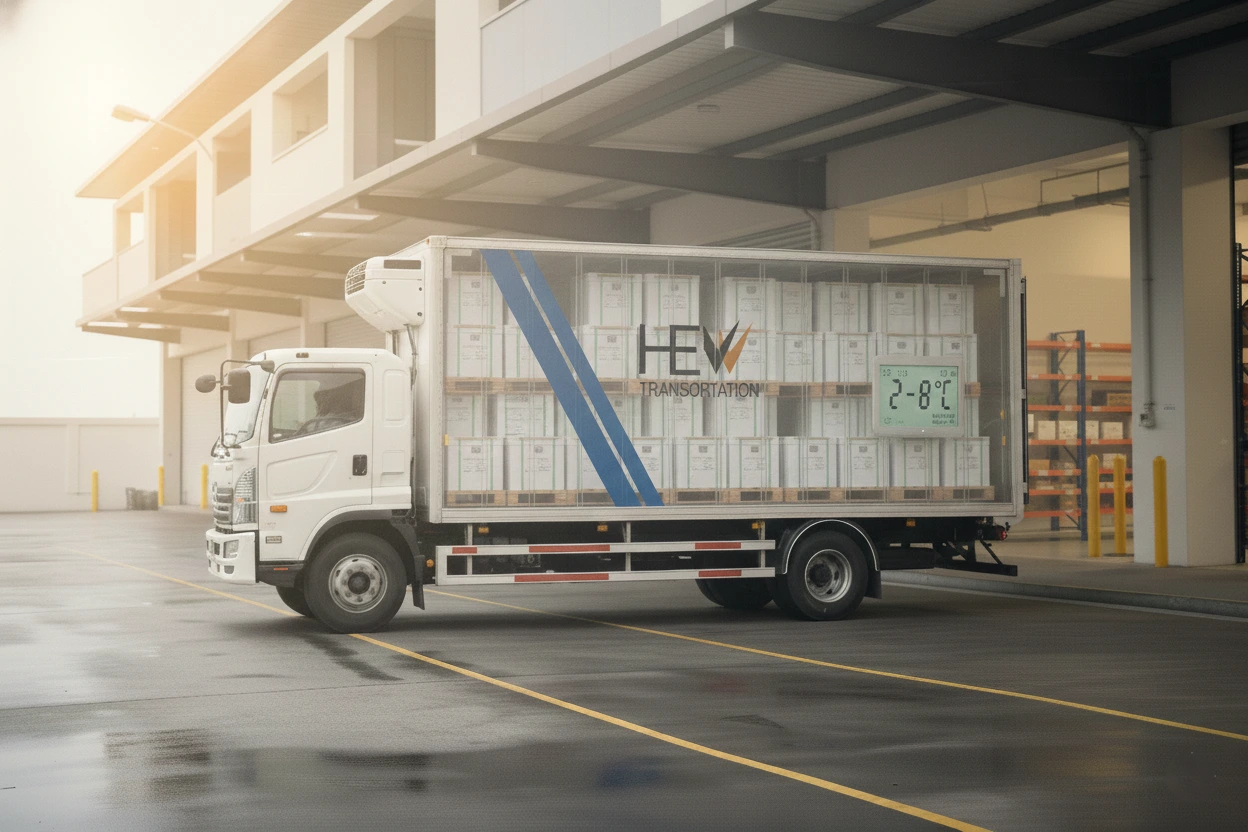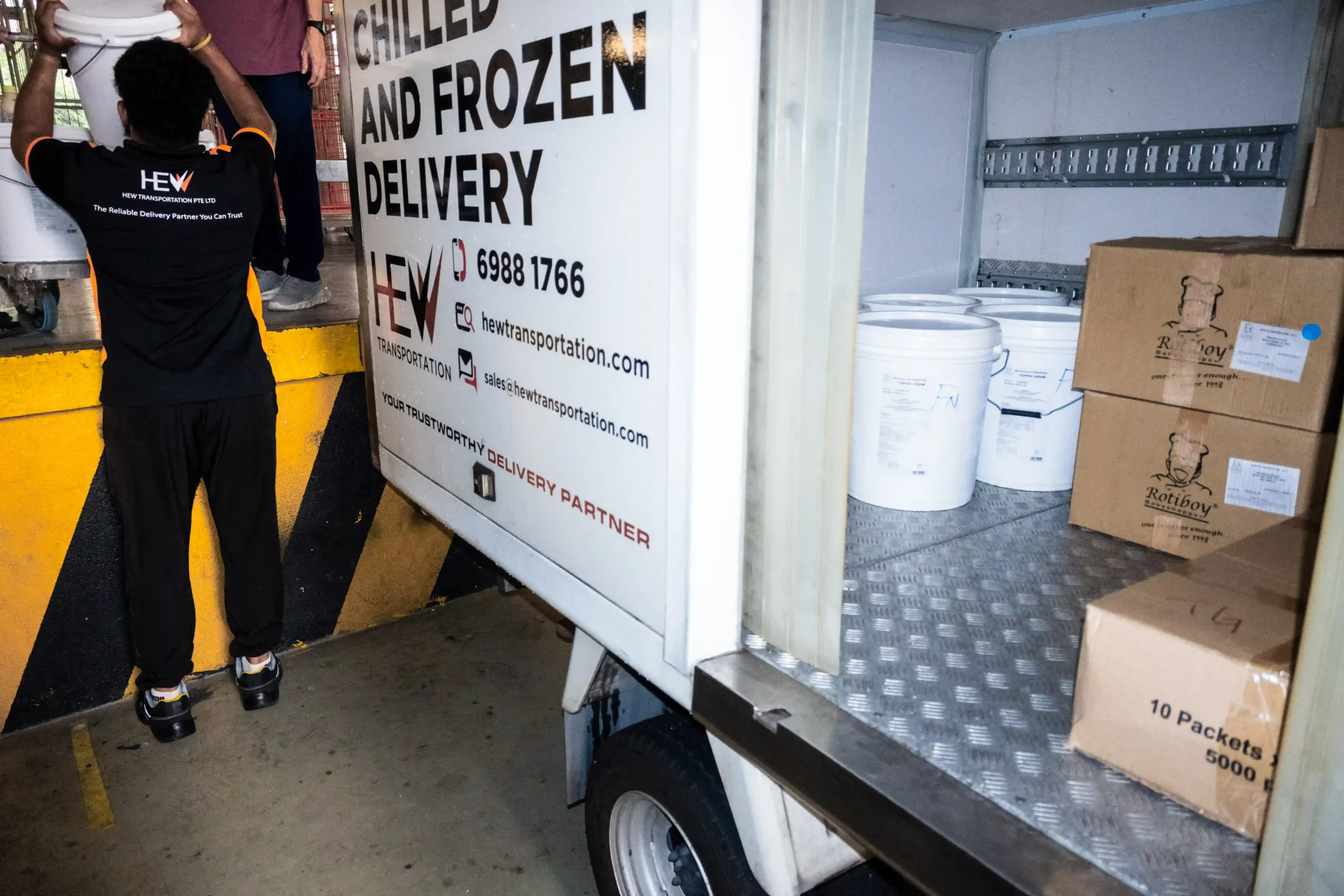
Cold chain delivery is a temperature-controlled logistics process that keeps perishable and temperature-sensitive products within a specified temperature range from storage to final delivery. It combines refrigerated storage, specialized transport, real-time monitoring, and careful handling to preserve product quality, safety, and compliance throughout the supply chain.
As industries such as food and beverage, pharmaceuticals, biotechnology, and e-commerce continue to grow, reliable cold chain logistics has become more important than ever. A single break in temperature control can compromise product quality, increase waste, and result in financial losses.
At HEW Transportation, we understand that successful cold chain delivery requires more than refrigerated vehicles—it demands a carefully managed system designed to protect products every step of the journey.
Why Cold Chain Delivery Matters
Cold chain delivery ensures products remain within their required temperature range from the moment they leave storage until they reach their destination. This continuous temperature control helps preserve freshness, extend shelf life, and maintain compliance with food safety and pharmaceutical standards.
Without an effective cold chain, businesses may face:
- Product spoilage
- Reduced product quality
- Food safety risks
- Regulatory compliance issues
- Increased operational costs
- Customer dissatisfaction
Industries that rely heavily on cold chain logistics include:
- Frozen food suppliers
- Fresh produce distributors
- Seafood and meat suppliers
- Dairy manufacturers
- Pharmaceutical companies
- Healthcare providers
- Floral distributors
How Cold Chain Delivery Works
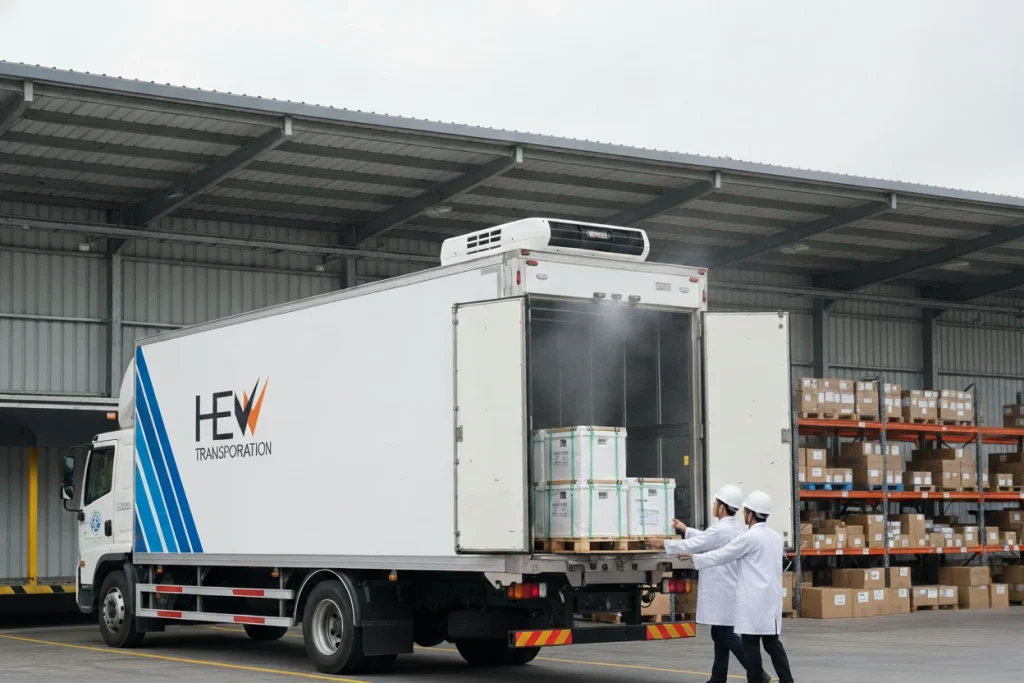
Cold chain delivery follows a series of carefully coordinated steps to maintain product integrity throughout transportation. Every stage is designed to minimize temperature fluctuations and ensure products arrive in optimal condition.
1. Temperature-Controlled Storage
The process begins in refrigerated warehouses or cold storage facilities. Products are stored according to their required temperature ranges before transportation.
Typical storage temperatures include:
| Product Type | Recommended Temperature |
|---|---|
| Frozen Foods | -18°C or below |
| Ice Cream | -25°C to -18°C |
| Fresh Meat | 0°C to 4°C |
| Seafood | 0°C to 2°C |
| Dairy Products | 1°C to 4°C |
| Fresh Fruits & Vegetables | Varies by product (typically 2°C–13°C) |
| Pharmaceuticals | 2°C to 8°C or as specified |
Proper storage prevents quality deterioration before products even begin their journey.
2. Pre-Cooling the Delivery Vehicle
Before loading begins, refrigerated trucks are pre-cooled to the required transport temperature.
This step helps:
- Reduce temperature shock
- Maintain product consistency
- Prevent condensation
- Improve energy efficiency during transport
Skipping pre-cooling can expose products to unnecessary temperature fluctuations during loading.
3. Careful Loading Procedures
Loading is one of the most critical stages in cold chain delivery because products are briefly exposed to ambient temperatures.
Best practices include:
- Minimizing loading time
- Organizing cargo before loading
- Keeping vehicle doors closed whenever possible
- Separating products with different temperature requirements
- Allowing proper airflow around pallets
Efficient loading helps maintain stable internal temperatures throughout transit.
4. Temperature-Controlled Transportation
Once the vehicle is on the road, refrigeration systems continuously regulate the cargo area’s temperature.
Modern refrigerated vehicles typically include:
- Digital temperature controllers
- Multi-temperature compartments
- GPS fleet tracking
- Real-time temperature monitoring
- Automated alerts for temperature deviations
These technologies enable logistics providers to identify and respond to issues before product quality is affected.
5. Continuous Monitoring
Continuous monitoring is one of the defining features of modern cold chain logistics. Sensors and telematics systems track environmental conditions throughout the journey, helping operators verify that products remain within their required temperature range.
Important data points include:
- Internal cargo temperature
- Vehicle location
- Door opening events
- Transit duration
- Equipment performance
- Temperature history for compliance records
These records also support audits, quality assurance, and customer confidence.
6. Safe Final Delivery
The final stage is delivering products while maintaining the cold chain until handover.
Delivery teams should:
- Confirm delivery schedules
- Minimize unloading time
- Verify product temperatures when required
- Obtain proof of delivery
- Maintain documentation for traceability
A successful delivery means the required temperature has been maintained from origin to destination without interruption.
Comparison: Cold Chain Delivery vs Standard Delivery
Understanding the differences between cold chain delivery and conventional transportation highlights why specialized logistics are essential for temperature-sensitive goods.
| Feature | Cold Chain Delivery | Standard Delivery |
|---|---|---|
| Temperature Control | Continuous | None |
| Refrigerated Vehicles | Required | Not required |
| Product Monitoring | Real-time | Limited |
| Suitable Products | Food, pharmaceuticals, healthcare | General cargo |
| Compliance Requirements | High | Lower |
| Spoilage Risk | Low when managed properly | High for perishables |
Businesses transporting perishable products should always choose a logistics provider with proven cold chain expertise.
Common Challenges in Cold Chain Delivery
Although technology has improved significantly, cold chain logistics still presents operational challenges.
Common issues include:
- Equipment malfunction
- Traffic delays
- Frequent door openings
- Improper loading practices
- Human error
- Extreme weather conditions
- Inadequate route planning
Experienced logistics providers reduce these risks through preventive maintenance, staff training, contingency planning, and continuous monitoring.
Pro Tip: Cold chain performance depends on the entire logistics process—not just refrigerated trucks. Proper storage, efficient loading, route optimization, real-time monitoring, and trained personnel all work together to maintain product quality from start to finish.
Best Practices for Maintaining an Effective Cold Chain
Businesses can improve delivery reliability by adopting proven cold chain practices throughout their supply chain.
Key recommendations include:
- Use validated refrigerated vehicles.
- Schedule deliveries to reduce transit time.
- Regularly calibrate temperature monitoring equipment.
- Train staff on cold chain handling procedures.
- Keep detailed temperature records for compliance.
- Inspect refrigeration equipment before every trip.
- Develop contingency plans for equipment failures.
For businesses transporting fresh produce, following best practices for transporting fresh fruits can further improve product quality, reduce spoilage, and enhance delivery efficiency.
Why Choose HEW Transportation for Cold Chain Delivery?
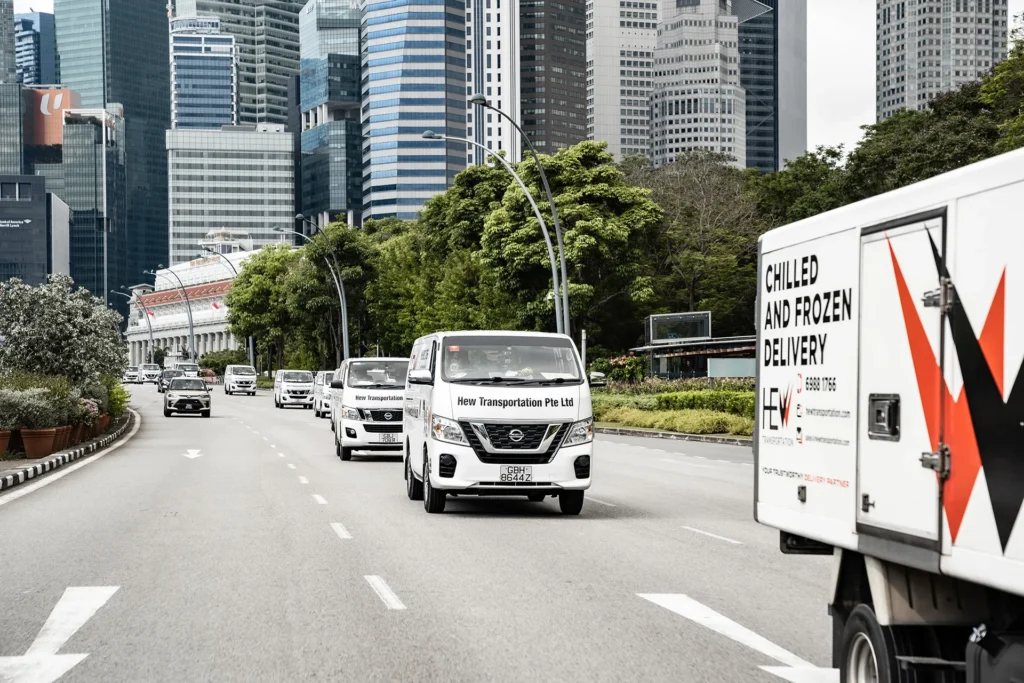
Reliable cold chain logistics requires experience, specialized equipment, and operational consistency. Businesses need a logistics partner that understands the importance of maintaining product integrity throughout every stage of transportation.
HEW Transportation provides temperature-controlled logistics solutions designed for businesses across Singapore. Our services include:
- Refrigerated transportation
- Frozen food logistics
- Scheduled delivery services
- Last-mile cold chain delivery
- Real-time shipment monitoring
- Professional fleet management
By combining modern refrigerated vehicles with experienced logistics professionals, HEW Transportation helps businesses protect product quality while meeting operational and regulatory requirements.
Conclusion
Understanding how cold chain delivery works is essential for any business transporting perishable or temperature-sensitive products. From temperature-controlled storage and pre-cooled vehicles to continuous monitoring and compliant final delivery, every step plays a vital role in preserving product quality and safety.
Partnering with an experienced logistics provider can significantly reduce spoilage, improve operational efficiency, and strengthen customer trust. Whether you need frozen food transportation, refrigerated delivery, or comprehensive cold chain logistics solutions, HEW Transportation has the expertise and infrastructure to support your business.
Ready to optimize your cold chain operations? Visit HEW Transportation to learn more about our temperature-controlled logistics services and discover how we can help protect your products from origin to destination.
FAQs (Frequently Ask Question)
What is cold chain delivery?
Cold chain delivery is a temperature-controlled logistics process that keeps perishable products within a specific temperature range from storage to final delivery.
Why is cold chain delivery important?
It helps preserve product quality, reduce spoilage, ensure food safety, and maintain compliance with industry regulations.
Which products require cold chain delivery?
Frozen foods, fresh produce, seafood, meat, dairy products, pharmaceuticals, vaccines, and other temperature-sensitive goods require cold chain logistics.
How is temperature monitored during cold chain transportation?
Modern refrigerated vehicles use digital sensors and real-time monitoring systems to track temperatures and alert operators to any deviations.
How can businesses improve cold chain efficiency?
Businesses can improve efficiency by using refrigerated vehicles, planning optimized delivery routes, monitoring temperatures continuously, and partnering with an experienced cold chain logistics provider.